In the art of winemaking and distilling, traditional oak barrels play a pivotal role in shaping the aging process and flavor profile of wine and spirits. However, conventional methods come at a cost, both financially and environmentally. Modern Cooperage, on the other hand, excels in producing cost-effective barrels that require significantly less water and energy. Fewer barrels are needed to meet production demands, which means fewer trees are harvested and the planet is left with a reduced carbon footprint. The best part is that none of these advancements compromise the richness of traditionally aged wine. Modern Cooperage ensures that quality aging remains intact. Affordable and environmentally friendly barrel solutions are undoubtedly creating a buzz across the winemaking and spirits industry during one of the most challenging markets in decades due to increasing costs and reduced customer demand.
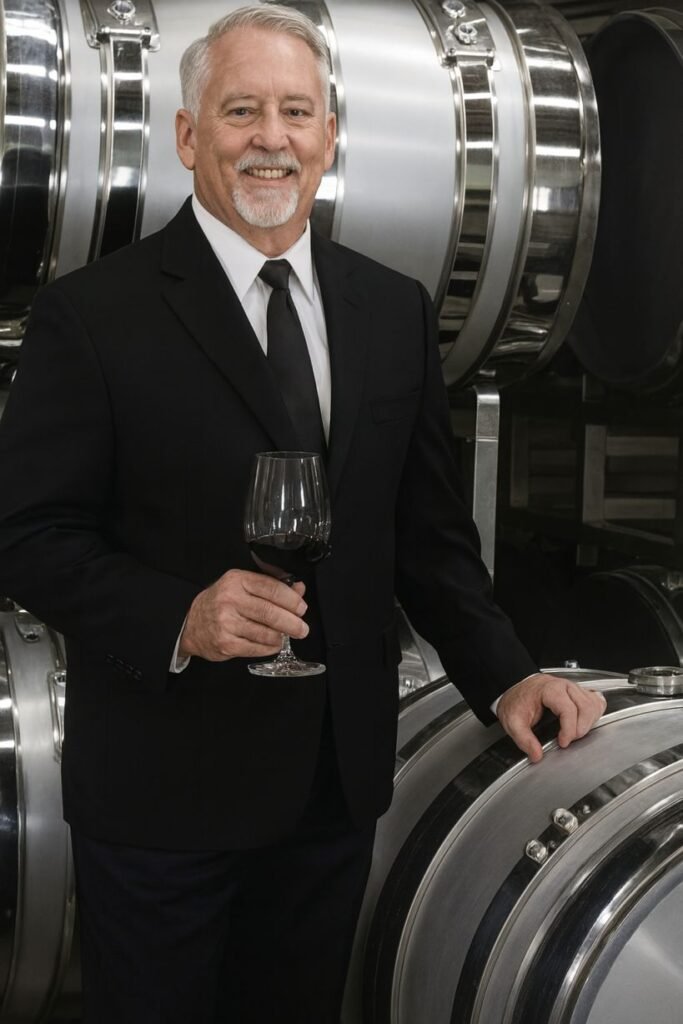
Join us for a lively conversation with Jon Roleder, the Founder and Managing Principal of Modern Cooperage, as he shares his vision and insights into innovating the craft of winemaking through advanced barrel engineering.
- What sparked the innovative conception of Modern Cooperage and how is it helping the industry in these challenging times?
Modern Cooperage was born during one of the most challenging transitions the beverage industry has faced in decades. Winemakers and distillers, especially those in premium markets, have been hit with rising oak prices, labor shortages, climbing production costs, and a decline in consumer demand. Producers were being forced to create higher-quality products with shrinking margins.
Jon Roleder observed this pressure firsthand. Visiting facilities across the United States, Europe, Latin America, the Caribbean, and South America, he consistently encountered the same frustrations: inconsistent barrel quality, short life cycles, long lead times, and excessive waste of valuable oak.
Modern Cooperage emerged from the belief that cooperage had to evolve not to replace tradition but to safeguard producers’ profitability, deliver greater consistency, and significantly reduce environmental impact. Innovation was no longer optional; it had become essential.
- Can you explain the Modern Cooperage advantage over traditional oak barrels?
The Modern Cooperage advantage lies in merging precision engineering with the sensory artistry of oak. Traditional barrels offer heritage and charm but come with variability, high replacement costs, and short operational lifetimes.
Modern Cooperage barrels deliver flavor precision and flexibility through controlled, repeatable, and virtually unlimited flavor and toast profiles. Lower costs are achieved through dramatically reduced barrel replacement cycles. Improved structural stability eliminates leaking, swelling, and empty-barrel maintenance. Precise batonnage for wine and agitation for spirits can be performed without opening the barrel and with ease. Predictable oxygen ingress gives winemakers and distillers true control while nearly eliminating all evaporation loss.
In an era where every production dollar matters, Modern Cooperage serves as both a quality enhancer and a strategic cost reducer.
- Do your advanced barrels have a positive ecological impact compared to conventional ones?
Absolutely. Sustainability is one of the core reasons many producers are adopting Modern Cooperage technology.
Traditional cooperage requires harvesting entire oak trees that yield only a few barrels, placing immense pressure on forests already affected by climate change and global demand.
Modern Cooperage barrels last for decades and use high-quality premium oak staves instead of complete barrel replacements. This reduces wood usage by up to 95 percent per aging cycle and leads to fewer trees being harvested. Carbon emissions are lowered through reduced shipping needs, and waste is minimized thanks to fewer failed or inconsistent barrels. Water usage for cleaning is reduced, and zero evaporative loss lowers emissions even further.
In today’s marketplace, sustainability affects brand reputation, investor confidence, and regulatory compliance. Modern Cooperage allows producers to meet environmental goals while improving margins.
- How do you manage innovation and affordability together?
Innovation only matters when it solves real problems and real financial challenges. Modern Cooperage was designed from the ground up to reduce total cost of ownership.
By extending barrel life, reducing product loss, eliminating inconsistencies, and minimizing the need for frequent oak replacements, producers immediately see measurable savings. In a climate of tightening demand and shrinking margins, Modern Cooperage ensures innovation pays for itself. Modern Cooperage barrels also hold 24 percent more volume within the same footprint compared to conventional barrels, contributing additional value. Affordability is further enhanced by reduced topping requirements due to zero evaporation loss and minimized production variability. Consistent flavors build consumer trust and support sales growth. The availability of numerous flavor profiles without purchasing a new barrel also contributes to cost efficiency.
It is technology built for the economic realities producers face today.
- Can you elaborate on the durability of your barrels?
Traditional barrels often need to be retired after one to three fills, an increasingly expensive issue as material costs rise.
Modern Cooperage barrels are engineered for decades of use. Their structural components resist swelling, leaking, temperature fluctuations, and microbial breakdown. Only the oak staves are replaced, which significantly reduces the cost per fill while providing fresh oak character with every cycle.
In a time when producers must maximize every resource, durability becomes a major strategic advantage.
- How do your barrels enhance the quality of wine and spirits?
Quality stems from precision and consistency, two areas where traditional barrels offer limited control. Modern Cooperage barrels enable winemakers and distillers to achieve uniform toast levels every time. They offer scientifically precise oxygen ingress and predictable extraction kinetics. They reduce batch variability and help preserve fruit purity and aromatic integrity.
With unpredictable market demand and rising competition, consistency has become essential. Modern Cooperage empowers producers to create flavor outcomes that are repeatable, scalable, and aligned with brand identity.
- What are the core values of your business, and how do you foster innovation within your team?
Modern Cooperage is built on five core pillars: integrity, curiosity, craftsmanship, sustainability, and collaboration. Every performance claim must be measurable and repeatable. Curiosity drives the team to explore and refine traditional limits. While honoring heritage, the company is deeply committed to engineering the future. Doing right by the planet, producers, and future generations is a foundational principle. Solutions are created through close collaboration with producers. Modern Cooperage prototypes constantly, gathering global feedback, and innovates based on real production challenges. Excellence is treated as a continuous pursuit, not a destination.
- What does the future look like for Modern Cooperage? Are there any upcoming developments you can share?
The future of Modern Cooperage is shaped by industry-wide pressures: the need to achieve higher quality, reduce costs, and minimize environmental impact.
Upcoming developments include new barrel formats for rum, tequila, whisky, botanical spirits, and fortified wines. The company is working on advanced oak infusion technologies for micro-precision flavor tuning. Sensor-enabled smart barrels that provide real-time data on extraction and aging will be introduced soon. Expansion into Europe, Asia, South America, and the Caribbean is also underway. Additional sustainability initiatives aim to reduce wood usage to the absolute minimum.
As the beverage industry undergoes major structural changes, Modern Cooperage intends to be the partner that keeps producers profitable, competitive, and environmentally responsible.
- Jon Roleder, as the Founder and Managing Principal of Modern Cooperage, how does it feel to revolutionize the beverage industry?
“It is incredibly rewarding and humbling. The wine and spirits industry is facing real challenges right now. Rising costs, uncertain demand, and increasing environmental expectations are reshaping what producers need. We did not set out to disrupt tradition; we set out to safeguard the future of producers.
If Modern Cooperage can help winemakers and distillers create better products, operate more sustainably, and remain financially resilient, then what we are doing is more than innovation. It has an impact and that is what feels most meaningful.”
Company Name: Modern Cooperage
Founder & Managing Principal: Jon Roleder
Website: www.moderncooperage.com